
The desire for even-toned, radiant skin is a goal many strive for, especially when it comes to sensitive areas of the body. Glowing, even skin can instill confidence and beauty. However, the delicate and sensitive nature of these areas requires extra care and extremely safe products to avoid irritation and damage that could have serious consequences. This comprehensive guide will reveal an integrated approach to safely and effectively lightening these areas, focusing on gentle yet effective ingredients that not only improve appearance but also maintain the health of your skin and its natural barrier.
Understanding darkening of sensitive areas: causes and the importance of safe handling
Before embarking on any skin lightening routine, it's essential to understand the underlying causes of darkening in sensitive areas. This understanding will help in choosing the right treatment and ensuring long-lasting results.
Common causes of darkening:
- Constant friction: Wearing tight clothing or repetitive movement (such as walking) in areas such as the inner thighs or underarms is often a major cause of darkening, as friction irritates the skin and increases melanin production.
- Hormonal changes: Hormones play a significant role in skin color. Hormonal fluctuations during periods such as pregnancy, breastfeeding, or the use of contraceptives can lead to increased pigmentation in various areas of the body, including sensitive areas.
- Some hair removal methods: Harsh or frequent hair removal methods, such as frequent shaving or the use of chemical hair removal creams, can cause irritation and inflammation, which in turn leads to darkening of the area.
- Skin or fungal infections: Fungal infections or chronic skin infections can cause skin discoloration and darkening if not treated properly.
- Weight gain or insulin resistance: In some cases, darkening of the skin folds (such as the neck, underarms, thighs) is associated with weight gain or a condition called acanthosis nigricans, which is often an indicator of insulin resistance.
- Sun exposure: Although sensitive areas are often covered, some may be exposed to direct or indirect sunlight (such as the bikini line when wearing a swimsuit), which stimulates melanin production and causes tanning.
Why is security a top priority?
- The skin in sensitive areas is much thinner and more sensitive than the skin on the rest of the body. This makes it more prone to irritation, inflammation, and even chemical burns if unsuitable products are used.
- Risks of adverse effects: Misuse of strong or unsuitable skin-lightening products can have the opposite effect. Instead of lightening the skin, they may cause severe irritation, resulting in permanent pigmentation that is difficult to treat later, or even permanent skin damage.
Risks of chemical bleaching and harmful products on sensitive skin
The pursuit of lighter skin may lead some to use strong or chemical-based lightening products without realizing the serious risks they pose to the skin in sensitive areas. These products, especially those that are unlicensed or contain prohibited ingredients, can cause significant damage that goes far beyond mere temporary irritation.
- Severe irritation and inflammation: The skin in sensitive areas is very thin, making it particularly prone to irritation. Symptoms can include intense redness, persistent itching, a burning sensation, and peeling, and in severe cases, may develop into eczema or contact dermatitis.
- Permanent skin discoloration (ochronosis): This is one of the most serious side effects of using skin-lightening products containing hydroquinone in high concentrations or for extended periods. The skin turns a bluish-gray or dark black color, a pigmentation that is very difficult to treat and may be permanent.
- Thinning and fragile skin: Some unsafe skin lightening products may contain corticosteroids (cortisone) which, when used for long periods, cause noticeable thinning of the skin and make it fragile and prone to bruising and tears.
- Increased sensitivity to the sun: Many of the chemical ingredients in skin lightening products make the skin more sensitive to sunlight, increasing the risk of sunburn and new pigmentation, thus exacerbating the original problem.
- Premature skin aging: Frequent use of harsh chemicals can destroy the skin's protective barrier, leading to dryness, loss of elasticity, and the appearance of premature aging signs.
- Systemic poisoning: Some counterfeit or unlicensed products contain toxic ingredients such as mercury or lead. Absorption of these substances through the skin can lead to systemic poisoning, causing serious health problems including kidney and nervous system damage.
- Nerve damage and steroid acne: Corticosteroids may cause damage to the nerves surrounding the skin and lead to a type of acne known as steroid acne, which is difficult to treat.
Ingredients to avoid completely:
- Hydroquinone: Although effective for skin lightening, it is associated with serious risks such as the aforementioned osteochondrosis and should only be used under strict medical supervision, for very specific conditions, and at controlled concentrations. It is not recommended for use on sensitive areas without a prescription.
- Pure lemon juice applied directly: Its high acidity makes it a strong irritant to sensitive skin. Applying it directly to the skin can cause chemical burns, redness, and even severe darkening due to the inflammation caused by the irritation.
- Baking soda (sodium bicarbonate): The alkalinity of baking soda conflicts with the skin's natural pH (which tends to be acidic), which can cause severe sensitivity, dryness, and irritation of sensitive skin.
- Strong fragrances, alcohol, and parabens: These ingredients are common irritants for sensitive skin in general, and especially in delicate areas. They can cause dryness, itching, and redness, hindering the safe lightening process.
Safe and effective ingredients for lightening sensitive areas: the perfect choice for your skin
When it comes to caring for and lightening sensitive areas, the primary focus should be on natural and gentle ingredients that deliver the desired results without causing any side effects. These ingredients work in harmony with the skin, maintaining its balance and protective barrier.
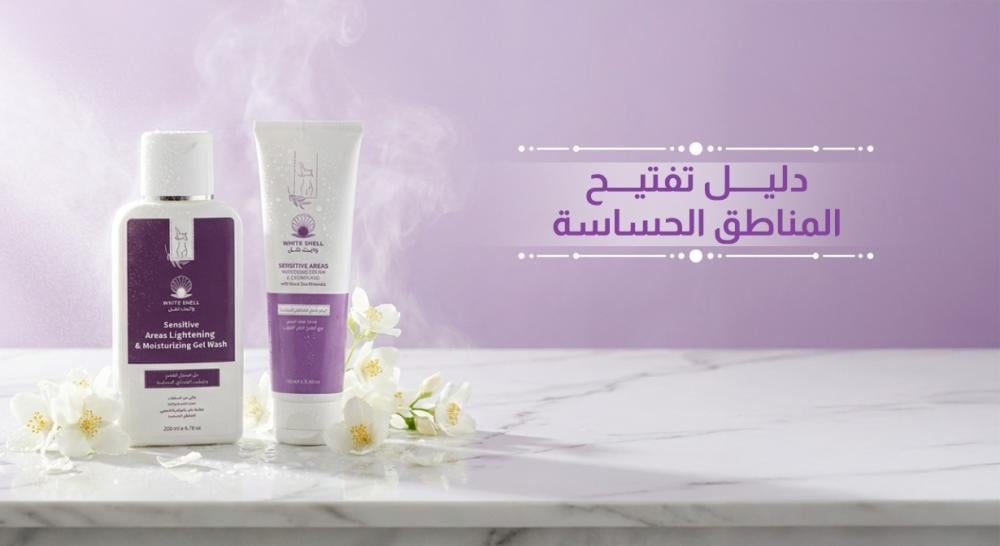
A. Ingredients of White Shell Sensitive Area Lightening Cream (safe for very sensitive skin):
This cream for lightening sensitive areas is specially designed to offer safe and effective solutions, based on a unique blend of active and soothing ingredients:
- Tea tree leaf oil:
- Its benefits: Known for its powerful antibacterial and antifungal properties, it's ideal for keeping the intimate area clean and protecting it from infections that can cause darkening. It also helps soothe the skin and reduce inflammation.
- Safety note: Use in safe and carefully diluted concentrations within products intended for sensitive areas to avoid any potential irritation.
- Chamomile flower extract:
- Its benefits: A powerful soother for irritated and sensitive skin. It effectively reduces inflammation and redness, and possesses antioxidant properties that protect the skin. It also helps to naturally moisturize and even out skin tone.
- Types: It is preferable to use types such as German and Roman chamomile because of their high effectiveness and gentleness on the skin.
- Dead Sea Salt:
- Its benefits: Rich in minerals that cleanse and detoxify the skin. It boosts hydration and leaves skin incredibly soft. It acts as a gentle exfoliant, removing accumulated dead skin cells that cause darkening, and helps fight acne and even out skin tone.
- Safety note: Do not use on open wounds or severely damaged skin.
- Zinc oxide:
- Its benefits: This broad-spectrum physical sunscreen protects the skin from UVA/UVB rays without being absorbed. It soothes and reduces redness and inflammation, and promotes skin healing. It is very gentle, non-irritating, and non-comedogenic, making it ideal for sensitive skin.
- Titanium dioxide:
- Its benefits: It provides effective sun protection, acts as an anti-inflammatory, reducing the risk of irritation. It is non-comedogenic (won't clog pores) and contributes to brightening and evening skin tone. It is very safe for sensitive skin.
- Lemon fruit extract:
- Its benefits: It is known for its ability to lighten dark spots and even out skin tone thanks to its vitamin C and citric acid content. It gently exfoliates surface cells, stimulates collagen production, and also has antibacterial properties.
- Safety note: In White Shell products, it is used in carefully studied and diluted concentrations to ensure effectiveness without causing any irritation to sensitive skin.
B. Ingredients of White Shell Sensitive Area Lightening and Moisturizing Wash:
For daily care, the lightening and moisturizing intimate wash offers the perfect balance between gentle cleansing, lightening and moisturizing:
- Lemon and pineapple extract:
- Their benefits: Working together, they effectively brighten and gently exfoliate the skin. The bromelain enzyme in pineapple and the citric acid in lemon are natural exfoliants that remove dead skin cells, revealing a brighter, more radiant complexion. They even out skin tone and give it a healthy glow.
- Safety note: Use within a specially formulated wash that ensures safe dilution of ingredients and the desired effectiveness without irritation.
- Lavender and Aloe Vera:
- Their benefits: They provide deep and long-lasting hydration. They effectively soothe sensitive skin, reducing inflammation and redness. They possess antibacterial properties and promote cell regeneration, contributing to skin healing and smoothing.
- Safety note: Pure aloe vera and safely diluted lavender are included in the gentle formula of the wash.
- Chamomile:
- Its benefits: It repeats its role as an effective skin soother, relieves potential irritation, and gives the skin superior softness and a feeling of natural freshness after each use.
c. Other safe, natural ingredients (can be found in White Shell care products ):
- Niacinamide (Vitamin B3): Improves skin elasticity, reduces pigmentation, and soothes redness.
- Vitamin C (stable forms): A powerful antioxidant that brightens the skin and stimulates collagen.
- Azelaic Acid: Reduces pigmentation and treats acne and inflammation.
- Alpha Arbutin: A natural derivative of hydroquinone, but safer and more effective at inhibiting melanin.
- Lactic Acid: A gentle exfoliant that moisturizes and brightens the skin.
- Licorice Extract: Known for its skin-brightening and soothing properties.
- Tranexamic Acid: Effective in treating stubborn pigmentation such as melasma.
Expert tips for effectively and safely caring for and lightening sensitive areas.
To achieve the best results in lightening and maintaining the health of sensitive areas, it's not enough to simply use the right products; this must be combined with a comprehensive care routine and healthy practices. Here are the most important expert tips:
- Consult a doctor or dermatologist: Before starting any skin lightening regimen, especially if the darkening is severe or accompanied by irritation, it is strongly advised to see a doctor. A doctor can determine the underlying cause of the darkening (such as a hormonal problem, fungal condition, or insulin resistance) and choose the appropriate and safe treatment for your specific situation.
- Patch test: This step is vital and necessary before using any new product on a large area. Apply a small amount of the product to a small, inconspicuous patch of skin (such as behind the ear or on the arm) and leave it for 24-48 hours to monitor for any allergic reaction or irritation.
- Gentle cleansing and exfoliation:
- Use cleansers specifically designed for sensitive areas, that are free of soap and strong perfumes, to maintain the skin's natural pH balance and avoid dryness and irritation.
- You can use a gentle, natural exfoliant once or twice a week using ingredients like a mixture of fine sugar and coconut or almond oil. This helps remove accumulated dead skin cells and reveals a brighter complexion. Avoid harsh scrubs or chemical exfoliants.
- Deep and continuous hydration: After cleansing and exfoliating, moisturizing is an essential step. Use moisturizers that are free of fragrances and irritating chemicals, or natural oils such as sweet almond oil or shea butter. Good hydration soothes the skin, strengthens its protective barrier, and prevents dryness that can lead to further darkening.
- Choosing the right clothes: Wear loose-fitting cotton clothing that allows for good ventilation of sensitive areas. Avoid tight-fitting clothes made of synthetic fibers that increase friction, moisture, and sweating, which can lead to irritation and darkening.
- Avoid irritating hair removal methods: Frequent shaving and chemical hair removal creams have caused irritation and darkening for many. It's preferable to opt for gentler methods such as natural herbal waxing or, ideally, laser hair removal under professional supervision, which can also reduce darkening over time.
- Consistency and patience: Lightening sensitive areas isn't an overnight process. Noticeable results require weeks or even months of consistent use of safe products and following the right care routine. Consistency and patience are the keys to success.
- Sun protection: If sensitive areas are exposed to the sun (such as the bikini line area when relaxing on the beach), it is essential to use a mineral sunscreen (containing zinc oxide or titanium dioxide) with a gentle, water-resistant formula to protect these delicate areas from new pigmentation.
- Treating the underlying causes: If the darkening is caused by an underlying health condition (such as insulin resistance, fungal infection), it is essential to treat these causes at their root to obtain lasting results and avoid a recurrence of the problem.
White Shell products: The ideal solution for safe whitening and reliable results
In your journey towards brighter, more radiant skin in sensitive areas, White Shell products stand out as a reliable and safe option.
Why White Shell?
Because it offers a range of products specifically designed for sensitive areas, based on natural ingredients scientifically proven to be safe and effective, White Shell is committed to the highest quality standards to ensure that every product provides the exceptional care your delicate skin deserves.
The balanced formulas of its products ensure the desired brightening without causing irritation, redness, or any side effects. On the contrary, these formulas work to strengthen the skin's natural barrier, soothe any existing inflammation, and provide deep hydration, leaving your skin soft, supple, and with an even tone. With White Shell, you can rest assured that you are investing in a solution that cares for your skin safely and effectively.
conclusion:
Achieving a lighter, more even skin tone in intimate areas doesn't have to come at the expense of your skin's safety and comfort. By carefully selecting safe and effective ingredients, like those found in White Shell products, and following expert advice for daily care, you can achieve the results you desire without any risks. Trust products specifically designed for intimate area care to enjoy radiant, even-toned, and healthy skin with complete confidence and comfort, while preserving what matters most: the safety and health of your skin.